Where Learning Meets Culture: A Day Inside Sodexo
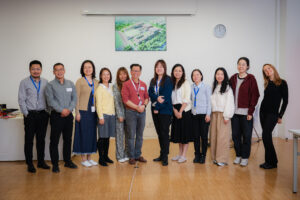
The R.E.D. HR Community was invited to Sodexo’s Shanghai office for a
special Learning Day — a chance not just to listen, but to observe, experience, and understand how culture is lived in a workplace.
The session centered on Isabelle’s interview. She is Sodexo’s General Manager in China and she offered a close look into the company’s operating logic, leadership philosophy, and decision-making spirit. Yet the deeper lessons also emerged as we walked through their office, noticing how culture reveals itself in details that are thoughtful, intentional, and quietly human.
The redesign of the Sodexo office was born out of a significant constraint. Following a merger, the company needed to keep the same physical footprint—without increasing square meters—while doubling the number of employees. Rather than seeing this as a limitation, the leadership team treated it as a strategic challenge that demanded clarity, data, and purpose.
Before redesigning anything, they asked a fundamental question: What kind of company are we? The answer was clear—a company that genuinely cares about its people. The real challenge, then, was not to say it, but to prove it. How do you translate care into space? How do you ensure that values are not just statements, but lived experiences?
To do this, Sodexo closely analyzed how people actually worked: where collaboration happened, how often desks were used, how light moved through the space, and what employees truly needed to perform at their best. Decisions were guided by data, not assumptions. Every adjustment was weighed against its impact on people, culture, and ways of working.
The result was a complete transformation. What was once a conventional office became a vibrant, luminous environment designed for flexibility and choice. Hot desks replaced fixed seating, meeting rooms were intentionally smaller to preserve natural light, and employees were given multiple options for how and where they work throughout the day. Culture was not communicated through posters or slogans, but embedded directly into the architecture of the space.
Perhaps the most symbolic decision was Isabelle’s own: she gave up a large, private office and now works from a standard space that anyone can book and use—especially when she is traveling. It was a simple yet powerful signal of accessibility, equality, and alignment between leadership behavior and company values.
This was not a story of “doing” a new office design. It was a disciplined, values-driven process of aligning actions with intent—proof that when organizations take the time to understand their people deeply, culture can be designed with integrity, not just intention.
1. Culture Expressed Through Identity — Even in Room Names
The first detail that caught our attention was simple yet telling: every meeting room is named after a French dessert.
It’s charming — but also symbolic. Rather than functional labels or numbers, Sodexo chooses names that:
-
Reflect heritage and culture
-
Bring warmth into daily routines (would you prefer to meet at room “1”, or at room “Croissant”?)
-
Spark a small moment of delight each time someone books a room
Culture doesn’t always rely on big statements. Sometimes it starts with making the everyday more memorable and human.
2. Smart Systems That Respect Time and Reduce Friction
Next, we noticed the self-service cabinet for office supplies — a system that automatically records who takes what and signals when items need replenishment.
Small, but powerful. It solves common office frustrations:
-
Missing supplies
-
Unclear accountability
-
Last-minute scrambling
This system respects people’s time, reduces cognitive load, and shows that operational care can be subtle yet impactful. At Sodexo, efficiency isn’t loud — it’s embedded.
3. Human Care Built Into the Physical Environment
Finally, there was the mommy room — a space deliberately designed for comfort, privacy, and dignity.
No productivity metric demands it. No policy forces it. It exists because people matter.
This single room communicates something profound: Sodexo considers different life stages not as exceptions, but as realities to respect. It’s a tangible expression of psychological safety, signaling: “You belong here, in every version of your life.”
What We Learned
Sodexo showed that culture becomes real not through grand statements, but through the details people encounter every day:
-
Decisions rooted in values, not aesthetics
-
A thoughtfully named meeting room
-
Systems that remove friction
-
Spaces that honor diverse life needs
As HR leaders, these are the moments that reveal how an organization truly treats its people.
Bringing It Back to HR
At R.E.D., we believe learning happens where operations, culture, and human needs intersect. Observing subtle, people-centric practices sparks reflection and inspires action.
If your HR team wants to explore innovative, people-first practices or join conversations that turn workplace culture into actionable insights, we’d love to have you with us at our next
community session.
Join R.E.D. and see how culture comes to life in everyday practices, not just policies.
Related Articles


When Project Management Finds Its Way Into Everyday Life | LFS PMP Insights