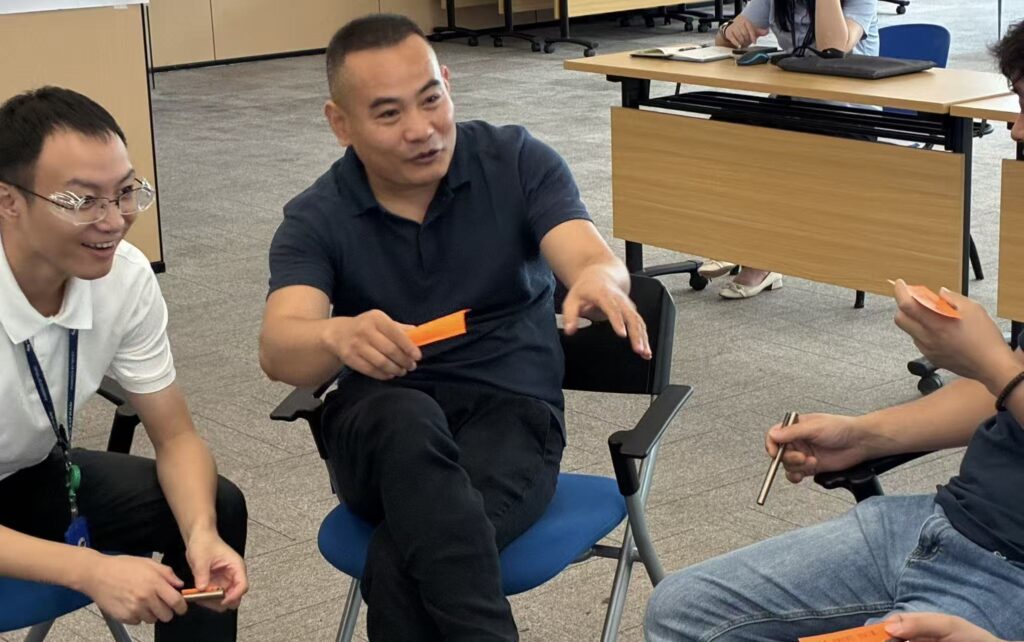
The Challenge of Being in the Middle Management
This Wednesday, we delivered a communication training session for managers at a leading manufacturing company in Suzhou, focusing on developing effective communication skills and strengthening everyday workplace communication.
We started this training because we recognized a common challenge among middle managers: they often find themselves balancing expectations from both sides.
They need to communicate leadership’s direction to their teams while also bringing employees’ feedback, concerns, and challenges back to management.
As Julie, the trainer, described it, middle managers are often like “sandwiches” caught between two layers, carrying pressure from above while supporting the people below.
However, effective communication is not only about passing information back and forth. It is about creating understanding, alignment, and trust.
Building Effective Communication Through Three Key Skills
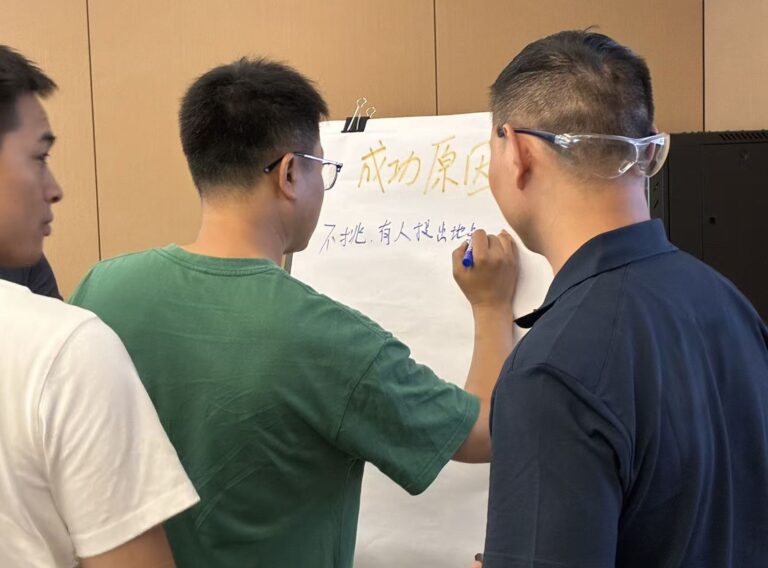
During the training, Trainer Julie introduced three essential communication skills:
Listening, Asking, and Telling.
Through interactive activities, discussions, and role-play exercises, participants explored how these skills can help managers navigate daily workplace conversations more effectively.
1. Listening: Hear Fully, Understand Completely
Effective communication starts with truly listening.
During the exercises, participants reflected on how easy it can be to interrupt, prepare a response too quickly, or jump directly into problem-solving before fully understanding the other person.
Good listening means:
- Not interrupting or rushing to respond;
- Giving others space to fully express their thoughts;
- Confirming understanding by asking:
“What I understand is… Is that correct?”
By listening carefully, managers can move beyond simply hearing words and start understanding the real needs behind the conversation.
2. Asking: Clarify, Explore, and Inspire
Great managers do not always provide immediate answers. Instead, they ask questions that help others think deeper.
Rather than asking:
“Is this right or wrong?”
Managers can explore further:
“How do you see this situation?”
“What makes this challenging?”
“What do you think is the reason behind this?”
During the practice sessions, participants started shifting from simply finding solutions to helping others discover solutions themselves.
This change is an important step from being a problem solver to becoming a facilitator of growth.
3. Telling: Translate, Communicate, and Build Alignment
Managers are not only messengers. They are translators who help different groups understand each other.
Instead of saying:
“This is what leadership requested.”
Effective communication focuses on:
- Why are we doing this?
- What does success look like?
- What role does each person play?
When people understand the purpose behind an action, communication becomes more meaningful and creates stronger commitment.
A Small but Powerful Tip: Bring Solutions, Not Only Problems
Julie also shared a practical suggestion for communicating upward:
When reporting to senior leaders, managers should avoid only describing the background and problems.
A stronger approach is to include:
- Your understanding of the situation;
- Possible solutions;
- Your own recommendations and thoughts.
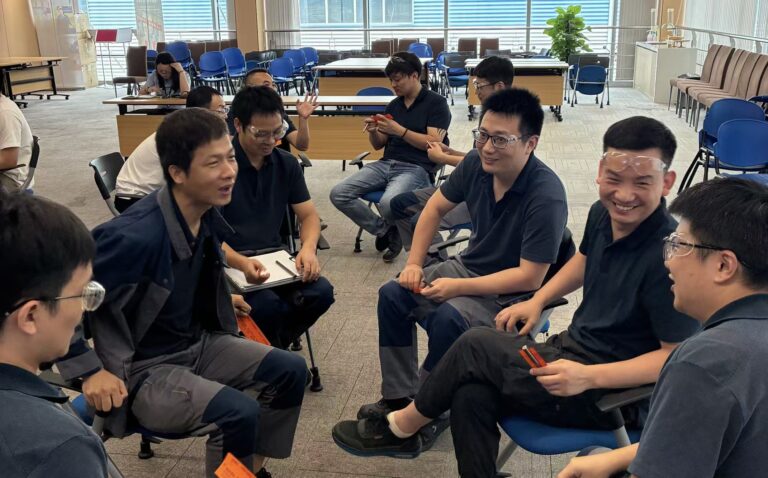
During the role-play exercises, participants had the opportunity to practice this mindset in realistic workplace scenarios. One moment that stood out was when a participant repeatedly focused on describing the existing problems during a discussion. Instead of immediately providing an answer, the other participant asked a simple but powerful question:
“What ideas do you have to address this situation?”
The participant paused and realized he had never really thought about this before.
This small moment reflected an important shift in communication: moving from simply raising problems to taking ownership and contributing solutions.
From Sandwich Managers to Communication Bridges
Effective communication does not happen through one conversation or one training session. It develops through continuous reflection, practice, and improvement.
By strengthening listening, asking, and telling skills, managers can move beyond being “caught in the middle” and become powerful bridges connecting people, teams, and organizations.
Looking to strengthen your managers’ effective communication skills?
Contact us to explore how we can support your organization.
Related Articles
From Slovakia to Shanghai: Why I Joined an HR Community to Learn How Professionals Really Connect

R.E.D. Learning Day: How HR Directors in China Influence Global Headquarters