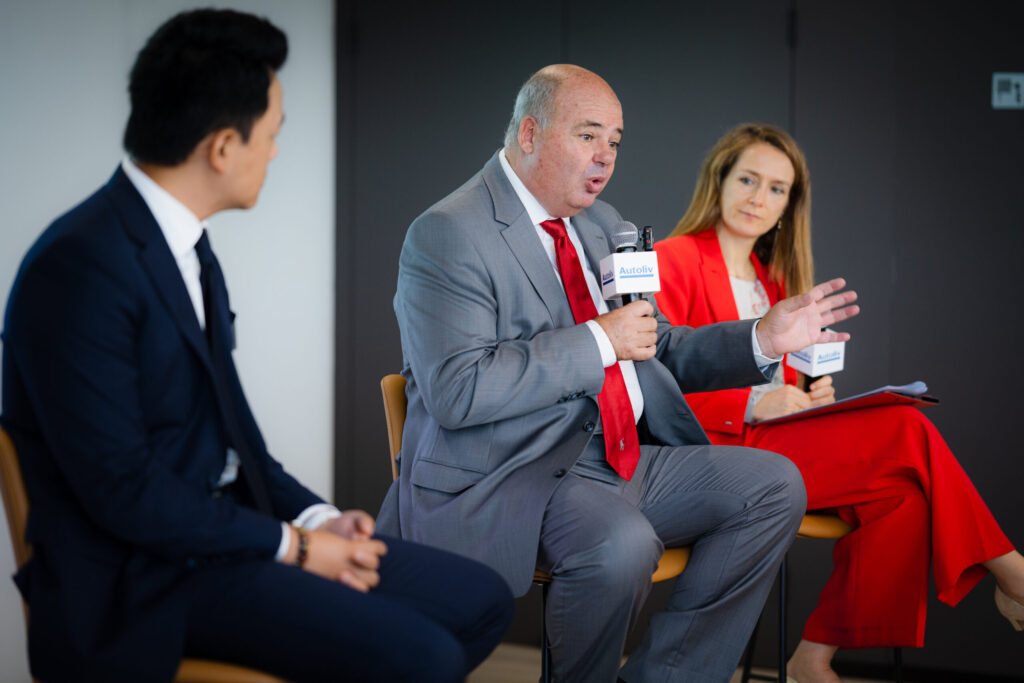
If you lead HR in China, you know the moment: you raise something that matters, headquarters nods, and nothing changes. How to influence headquarters from the region was the question we put to our panel at the latest R.E.D. Learning Day on Friday 16 October, hosted by Autoliv in Shanghai.
A warm thank you to Wenfang Wei, Jason Xing and Fabien from Autoliv for opening your doors, sharing how your HR team works, and making the day so easy for everyone. And thank you to our speakers, Jean-Luc Giraud (former CHRO) and Kevin Hong, for a conversation that was honest and practical.
Here is what came out of it.
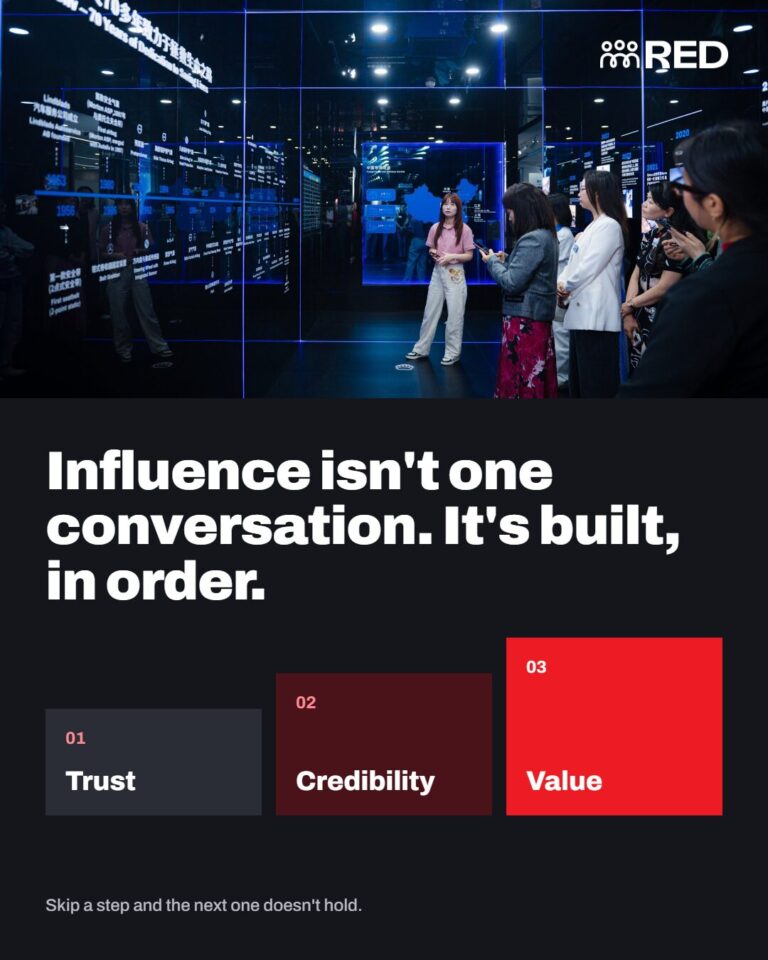
The HQ influence ladder: how to influence headquarters in three steps
Influence is not one conversation. It is built in a sequence: trust first, then credibility, then value. Skip a step and the next one doesn’t hold.
This matches what research on multinationals has found. In a study of 283 subsidiaries, Cyril Bouquet and Julian Birkinshaw showed that HQ attention depends partly on a unit’s “weight” (its position in the group) and partly on its “voice”, how actively it makes itself heard. And voice matters most for units far from headquarters, which is exactly where most HR leaders in China sit.
Step 1: Build trust by telling HQ what isn’t going well
Trust starts with transparency, and that includes the uncomfortable parts. If headquarters only hears good news from the region, it eventually stops believing the good news too. When you disclose problems early, HQ learns that what you say is real, and that when you raise something, it’s worth listening to.
This takes vulnerability. When things aren’t going well, the instinct is to keep it quiet, because asking for help can feel like admitting you’re not as competent as you’d like to appear. The panel was clear: that instinct costs you trust over time.
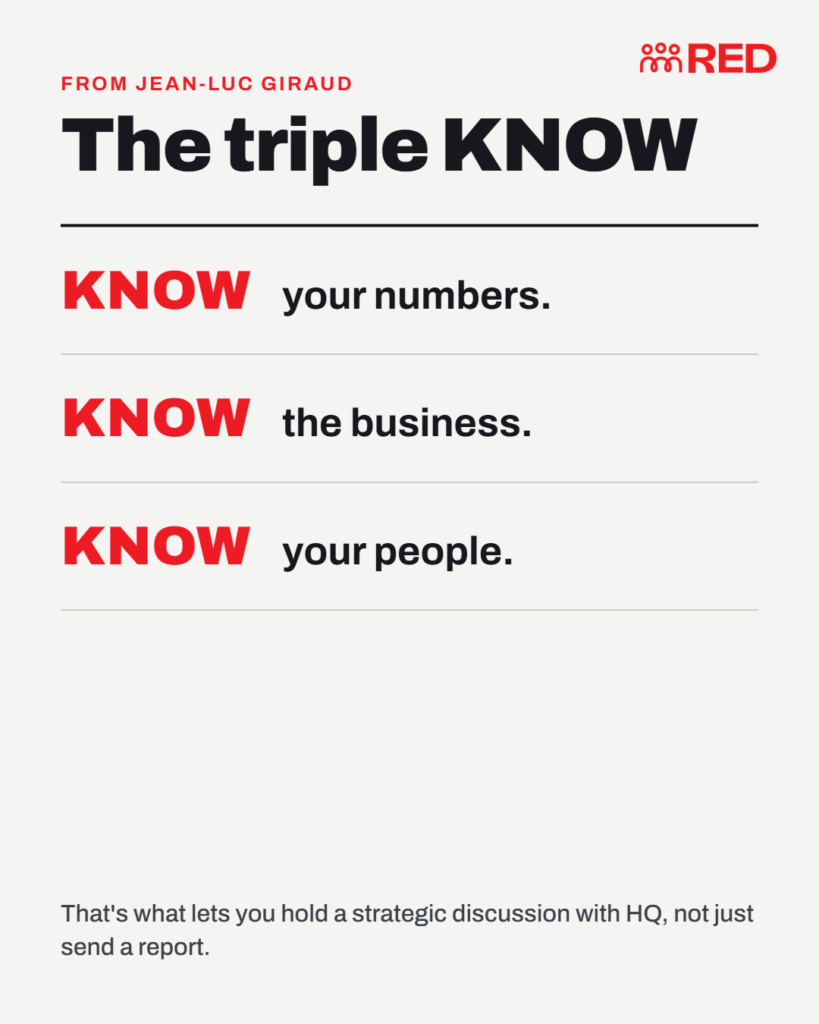
Jean-Luc added what he calls the triple KNOW:
- Know your numbers. As an HR leader, your data is your first argument.
- Know the business. Not just HR’s view of it.
- Know your people. So you can hold a strategic discussion with HQ, not just report on headcount.
Step 2: Build credibility before you need it
Kevin put it simply: you need to be fluent in data and fluent in relationships. Know your own numbers, and also know the people you need to know at headquarters.
Credibility also starts with attitude. Jean-Luc said he often sees HRDs who are a bit shy, or unsure of their own value and voice. The region counts on you. You have a place at the table, and your voice needs to be heard. If you don’t believe that, it’s hard for HQ to.
And timing matters. You can’t start building credibility on the day you need HQ to listen. By then it’s too late. Start early, so there is something to build on when it counts.
Step 3: Build value from headquarters’ side of the table
Value starts with your counterpart, not with you. What does HQ actually need from the region right now? Speed? Transparency? Something else? The answer changes how you should behave. Influence works when you start from their expectations, not only your own perspective.
My takeaway as moderator
Most of what makes an HR leader influential with headquarters happens outside the meeting where they need something. The honesty, the numbers, the relationships and the confidence are built quietly, months before.
Marion, founder of Intandid and moderator of R.E.D.


If your region’s voice isn’t landing at headquarters, it’s rarely a single conversation that will fix it. At Intandid, we work with HR and business leaders in China and APAC through executive coaching, leadership training and facilitation to build the confidence, credibility and relationships that make HQ listen.
If you’d like to talk about what that could look like for your team, contact us.

Related Articles
R.E.D. Learning Day Recap: How to influence headquarters from the region