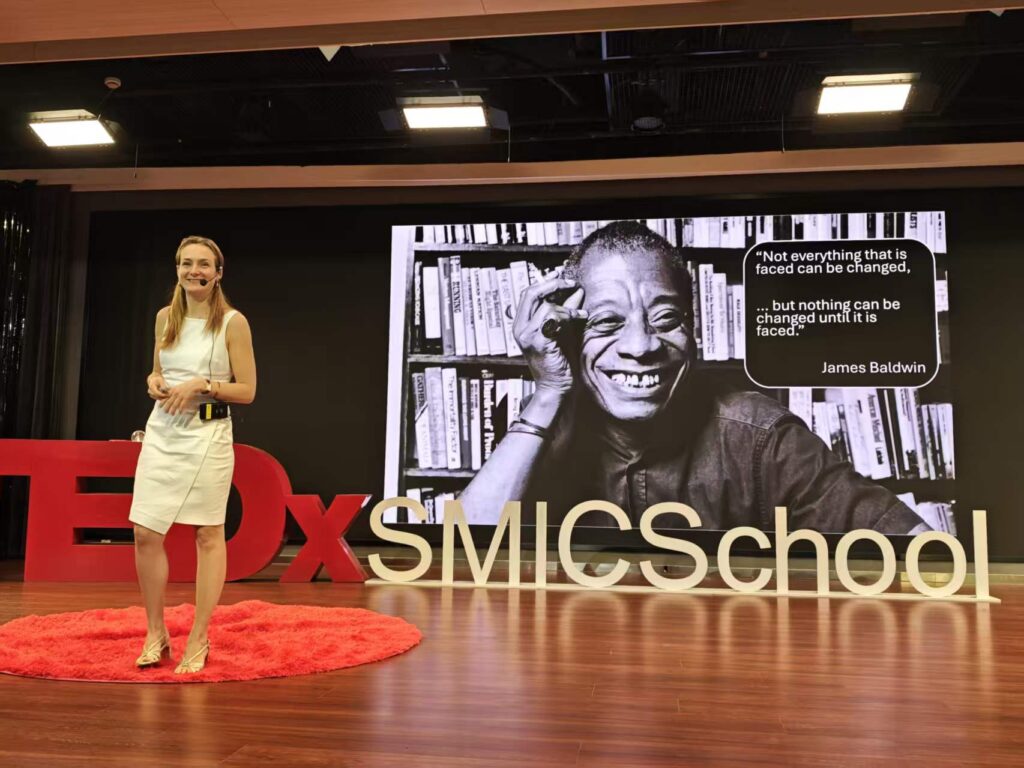
Reflections from a TEDx Talk at SMIC School
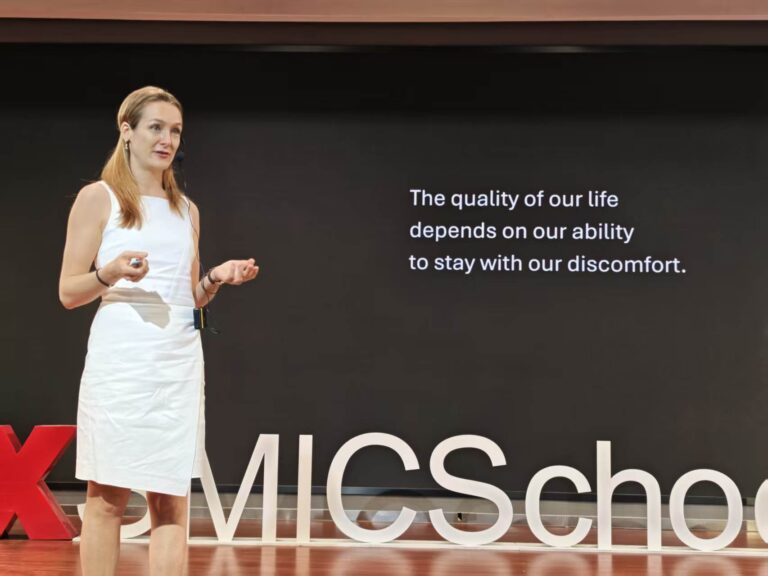
Last weekend, INTANDID’s founder Marion was invited by Leo and his student leadership team at SMIC School to deliver a TEDx talk exploring a question increasingly relevant to leaders today:
What if the quality of our leadership depends less on what we do — and more on how we relate to discomfort?
The session was not designed as a traditional lecture. Instead, it began with a simple experience that invited students to notice something most of us rarely observe: our automatic reactions when discomfort appears.
That moment opened a broader conversation about leadership, awareness, and decision-making in a fast-moving world.
Why Discomfort Matters in Leadership
Modern organizations often prioritize speed:
faster decisions, faster execution, faster results.
Yet many leadership challenges do not require faster action — they require greater presence.
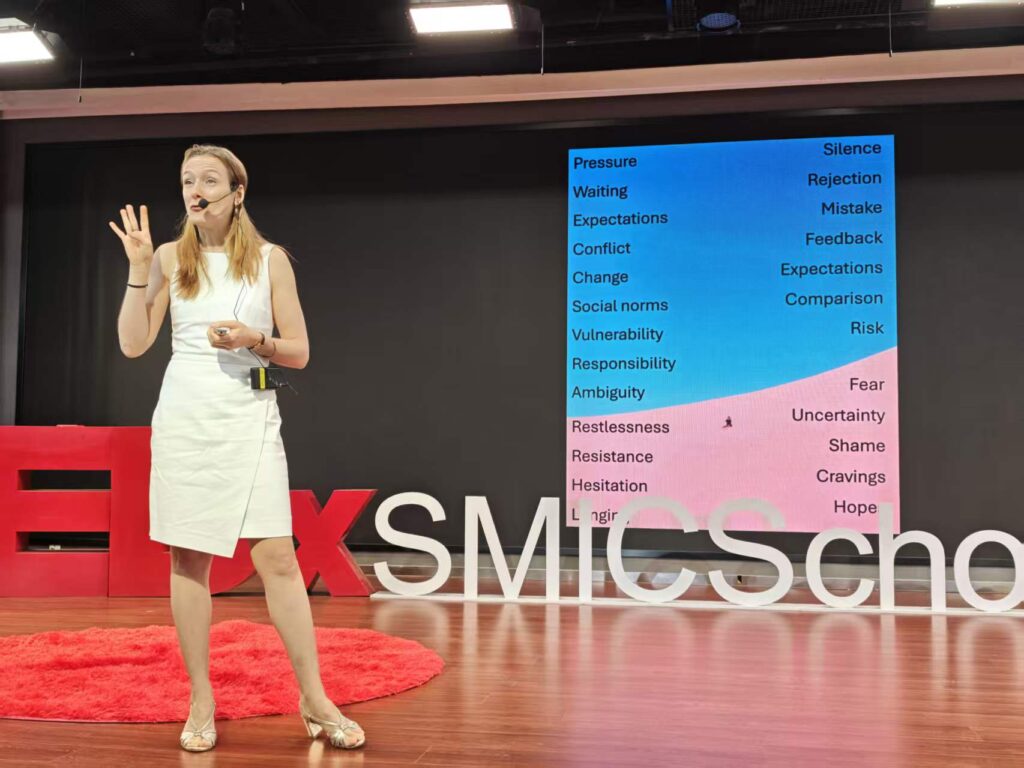
Difficult conversations.
Uncertainty during change.
Conflicting priorities.
Moments where there is no clear answer.
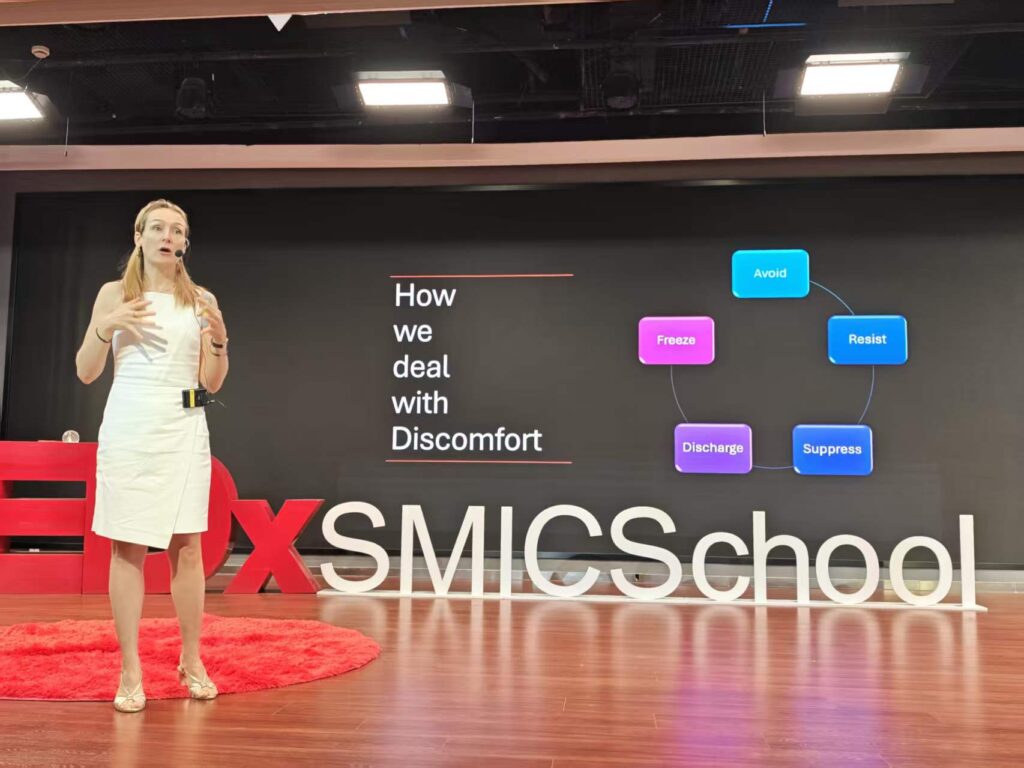
In these situations, leaders frequently fall into predictable patterns:
- Avoiding difficult topics
- Over-controlling outcomes
- Suppressing tension
- Reacting emotionally
- Freezing when overwhelmed
These reactions are human. But repeated over time, they reduce clarity, trust, and effectiveness.
Leadership maturity begins when we learn to recognize these patterns instead of being driven by them.
From Reaction to Awareness
A central idea explored during the talk was simple:
Discomfort itself is rarely the problem.
Our automatic resistance to it is.
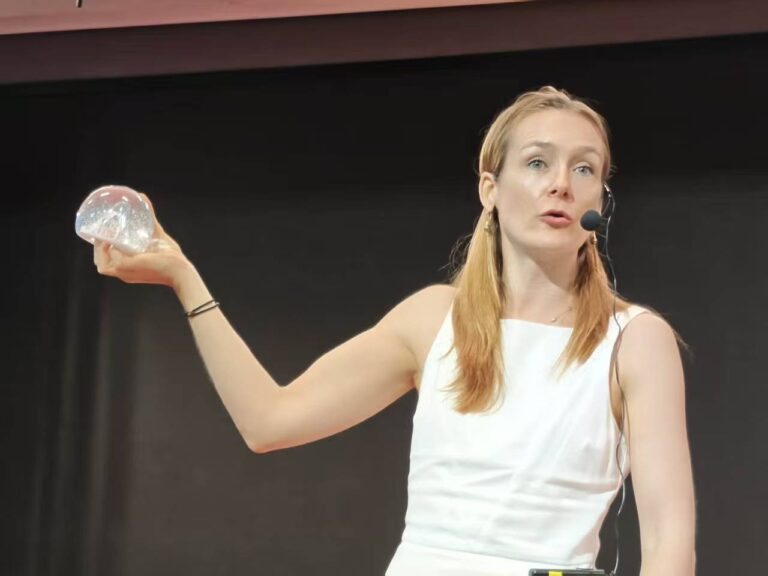
When leaders immediately react to pressure, they “shake the snow globe” — creating more noise internally and within teams.
When they pause long enough to observe before acting, something different emerges:
perspective, intentionality, and better decisions.
This capacity — staying present in uncertainty — is increasingly recognized as a core leadership capability linked to emotional intelligence and psychological safety.
Practicing the Leadership Mindset
Developing this skill does not require dramatic change. It begins with small daily practices:
- Pausing before responding in a challenging conversation
- Listening fully instead of preparing the next argument
- Allowing uncertainty before rushing toward solutions
- Noticing emotional reactions without immediately acting on them
These moments build what INTANDID calls the Coaching Leader mindset — leaders who create space before action and therefore enable stronger collaboration and trust.
2.Ownership Creates the Rhythm of Collaboration
Across all three groups, one instinct stood out: assign clear owners. Not to distribute pressure, but to distribute clarity.
When each segment of a project is held by someone who understands its purpose:
Progress feels intentional
Coordination becomes collaborative rather than reactive
Teams move in a shared rhythm
Even small responsibilities benefit from clear ownership. Assigning responsibility for each part of a project improves focus, coordination, and team momentum.
A New Generation of Leaders
One of the most inspiring aspects of the SMIC session was the students themselves. Their openness, curiosity, and willingness to engage with complex emotional and leadership questions reflect a growing shift: younger generations are not only asking how to succeed, but also how to lead consciously.
INTANDID extends sincere thanks to Leo and the SMIC student team for the invitation and for creating an environment where meaningful dialogue could take place.
Beyond the Talk
At INTANDID, we believe leadership development is not only about acquiring new tools. It is about expanding awareness — learning when to act and when to pause.
Because sometimes the most powerful leadership move is not immediate action.
It is creating enough space for clarity to emerge first.
About INTANDID
INTANDID partners with organizations worldwide to develop leaders, strengthen workplace culture, and build coaching capabilities through executive coaching, leadership training, and experiential learning programs.

Related Articles
How to write an award nomination that a jury can’t ignore: lessons from a juror