Many HR professionals work hard, deliver results, and support their teams every day.
Yet when senior opportunities appear, they often see others’ names being considered.
Why?
Because moving into higher HR leadership roles requires more than being a strong HR operator. It requires becoming a strategic business leader.
Whether your goal is to become an HR Director, Head of HR, CHRO, or a regional HR leader, these five approaches can significantly accelerate your growth.
1. Stop Managing HR Tasks and Start Solving Business Problems
One of the biggest shifts between an HR Manager and a senior HR leader is the ability to connect HR work directly to business outcomes.
Instead of saying:
“We need a new training program.”
A strategic HR leader asks:
- What business challenge are we trying to solve?
- Is productivity declining?
- Are we losing high performers?
- Is leadership capability limiting growth?
Senior leaders are promoted because they help the organization achieve its goals.
Ask yourself:
- How does my work impact revenue, growth, productivity, innovation, or retention?
- Can I explain the business value of every major HR initiative?
- Do I understand the company’s strategy as well as the HR strategy?
Our tip: Hiring managers and executives often look for strategic HR leadership and business partnering capabilities when selecting HR Directors.

2. Build Influence Beyond the HR Department
Many talented HR professionals limit their visibility by spending most of their time within the HR function.
Higher-level roles require cross-functional influence.
Start intentionally building relationships with:
General Managers (in your region, and beyond)
Finance leaders
Operations teams
Sales leaders
Supply chain teams
Regional stakeholders
These relationships help you:
Understand business realities.
Gain credibility.
Learn how different functions make decisions.
Become involved in strategic projects.
A simple habit is to schedule one coffee conversation each month with a leader outside HR. Ask about their priorities, frustrations, best practices and goals.
You will learn more in those conversations than in many formal meetings.
3. Develop Executive Communication Skills
As responsibilities increase, communication becomes one of your most important leadership tools.
Senior executives rarely have time for long explanations. They need clarity.
Practice:
Leading with the recommendation.
Using data to support your message.
Explaining complex people issues in simple language.
Adapting your communication to different audiences.
Handling difficult conversations with confidence.
For example:
Instead of:
“Employee engagement has several contributing factors that may require further investigation.”
Say:
“Our engagement score dropped 8 points, primarily due to workload concerns and manager communication. I recommend three actions over the next quarter.”
Clear communication builds trust and positions you as a confident leader.

4. Invest in Leadership Development and Self-Awareness
Technical HR knowledge alone is not enough for senior leadership. But the best HR leaders understand:
Their strengths.
Their blind spots.
Their leadership style.
How others experience them.
This is why coaching, mentorship, leadership programs, and assessments like the CliftonStrengths or the Hogan Assessment can be powerful accelerators.
Ask for feedback regularly:
What should I continue doing?
What should I stop doing?
What would make me a stronger leader?
Growth often begins when we become aware of patterns we cannot see ourselves.
A leader who continuously learns is far more likely to be considered for larger responsibilities.
5. Create a Visible Leadership Brand
Many HR professionals believe that good work will automatically be noticed. Unfortunately, that is not always true. Senior opportunities often go to people who are both capable and visible.
You can build a leadership brand by:
- Sharing insights on LinkedIn.
- Speaking at industry events.
- Leading internal initiatives.
- Facilitating workshops.
- Mentoring junior HR professionals like Mentor Walks.
- Contributing to professional communities like the R.E.D. HR Community
This does not mean becoming an influencer.
It means becoming known for a particular expertise, such as leadership development, employee engagement, organizational culture, talent management, or HR transformation.
When people consistently associate your name with value, opportunities tend to follow.


A Simple Growth Framework for HR Leaders
Question | Why It Matters |
|---|---|
Do I understand the business strategy? | Strategic thinking |
Am I influencing leaders outside HR? | Organizational impact |
Can I communicate like an executive? | Leadership credibility |
Am I actively developing myself? | Long-term growth |
Am I visible for the value I create? | Career opportunities |
Even improving one area over the next six months can create significant momentum in your career.

Final Thoughts
The transition from HR Manager to HR Director or CHRO rarely happens because someone simply works harder.
It happens because they evolve from being an HR expert into a trusted business leader.
Start by:
Connecting HR to business outcomes.
Building relationships across the organization.
Communicating with executive-level clarity.
Investing in your own leadership development.
Creating a visible and credible leadership brand.
Small, consistent actions in these areas can open doors to opportunities that once felt out of reach.
Ready to Accelerate Your HR Leadership Journey?
At INTANDID, we believe great HR leaders are built through intentional development, meaningful relationships, and practical experience. That’s why we support HR professionals through Leadership coaching and trainings, Leaders’ development programs, Hipo Program design and implementation as well as Culture and engagement initiatives.
If you’re preparing for your next leadership role and would like to explore how coaching or leadership development could support your growth, let’s start a conversation.
For those looking to continue learning alongside a trusted network of peers, The R.E.D. HR Community — Relationships, Engagement, Development — offers a unique community for HR leaders and business professionals.
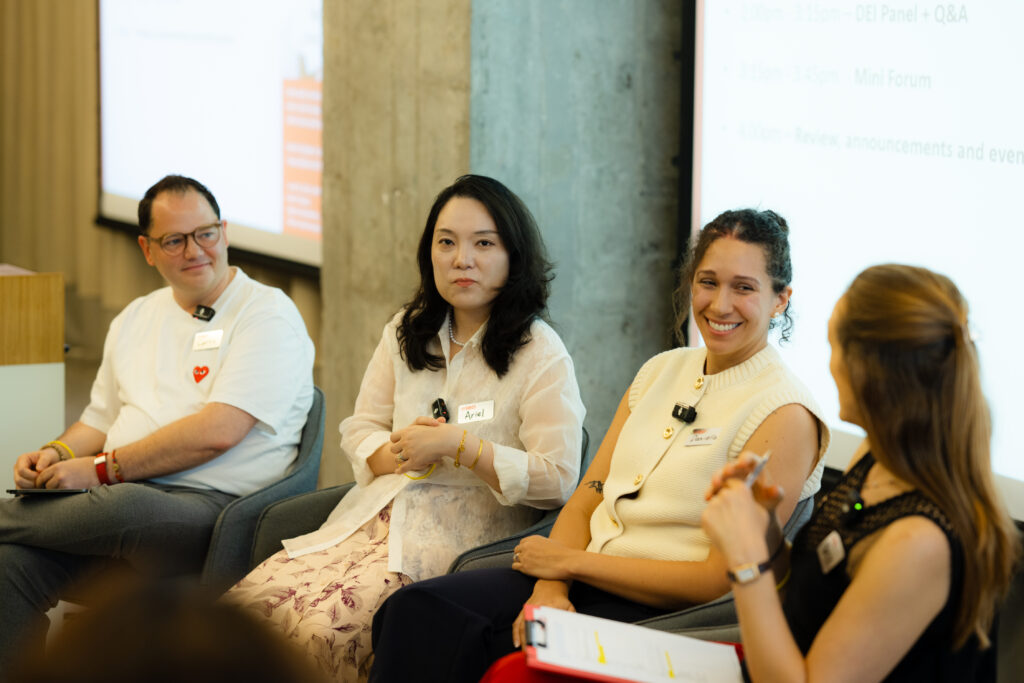
Through exclusive breakfasts, learning events, mentorship opportunities, and strategic HR forums, R.E.D. creates a space where leaders can exchange ideas, gain fresh perspectives, and grow together.
Whether you’re preparing for your first HR Director role, expanding your influence as a Head of HR, or aiming for a future CHRO position, investing in both your skills and your network can be one of the most powerful career decisions you make.
Connect with us to learn more about INTANDID and the R.E.D. community!

Related Articles

How to write an award nomination that a jury can’t ignore: lessons from a juror